
'... that work is done. The task is to reallocate what has been built, with the courage of a founder and the discipline of an owner.'

While the latest trigger for him stepping down could be the uncertainty around his renewal as a director at the AGM, which is otherwise a routine matter, Chandra may have been contemplating quitting for some time now because of the overall turbulence with the principal shareholder on the leadership issue.

Ratan Naval Tata, a prominent industrialist, philanthropist, and former Chairman of Tata Sons, has been admitted to the intensive care unit (ICU) at Breach Candy Hospital in Mumbai, reports Mid-Day newspaper.
Leverage ratio falls to under 1; but group heavily dependent on TCS & Tata Motors.

Ratan Tata was one of the world's most influential industrialists yet he never appeared on any list of billionaires. He controlled over 30 companies that operated in over 100 countries across six continents yet lived an unpretentious life. Ratan Naval Tata, who died at a Mumbai hospital on Wednesday night at the age of 86 years, enjoyed a perhaps unique status -- a corporate titan who was considered a 'secular living saint' with a reputation for decency and integrity.

There were certainly qualities adhering to the Tata Group, which emanated from the persona of Ratan Tata. Most notable of these would be the low profile he maintained, which sharply contrasted the in-your-face celebrity status, celebration of wealth and pursuit of importance many of liberalised India's rich, love, notes Shyam G Menon.

Fourteen per cent of the $16 billion invested by Ratan Tata in M&As abroad has been written off by his successor.

They were touted as prestigious takeover trophies won abroad, but there is no mention of the Tatas at the Internet addresses of luxurious car brands Jaguar and Land Rover.

This is largely on the back of Tata Steel's expansion at Kalinganagar, as well as JLR's in China and Brazil

The Cyrus Mistry camp is confident that independent directors will take their cue from their counterparts in Indian Hotels.

Tata was concerned that most innovations were happening outside India, some by Indians.

In the domestic market, the Tata Group has lost ground in the passenger car business.
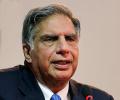
John Elliott, the author of Implosion: India's Tryst with Reality, on his Riding the Elephant blog, says the sacking of Cyrus Mistry as chairman of Tata and Sons was in line with Ratan Tata's personal style of dealing with executives
In FY23, Indian operations accounted for 41.6 per cent of the consolidated revenue of India's top five multinationals, up from 34 per cent in FY18 and 33.2 per cent and 34.2 per cent in FY21.

As a step to protect its interest as a lender, SBI will look at the financial stability and corporate governance practices in companies where it has exposure.

Budget 2014-15 has done away with the tax sunset clause of March 2014.

It is believed that Tata Sons was unhappy with Mistry's approach of shedding non-profit businesses, including the conglomerate's steel business in Europe, and concentrating only on cash cows

Ahmedabad-based Adani Group is said to be the frontrunner to buy out both Tata Steel and Larsen & Toubro's stake in Dhamra.

Ratan Tata was the first one to realise that Indian companies had become a prisoner to tradition and needed to radically innovate.

Cyrus Mistry had put in place a strategy that would have pulled most of the Tata group's 'legacy hotspots' out of the financial mess from legacy issues and helped turn around the group's finances.

Just before the 2008 financial crisis made headlines, Indian companies were on a global buying spree. In the fifth part of the series, Dev Chatterjee and Krishna Kant discuss how the crisis came as a black swan event for some, changing the mood from exuberance to despair.
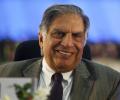
'I think some of us, like Mukesh Ambani, myself and those of us who head industrial units, ought to really focus on what we can really do to make the world a safer place, maybe 50 or 100 years from now.' 'For instance, how can we deal with climate change and global warming, right now?' 'The effects of it may not be felt now; in fact, we may pay a price for it today, but it will help the generations to follow.'

'What's sad today is that there are so many people who cannot find work, not because the country is devoid of that opportunity, but because we are not doing enough in the country.'

Tata Steel, others sell assets abroad after taking massive impairments.

Firms to find alternative export routes or face increased trade barriers

Indian CEOs might like to make some serious course correction.

TCS still ace in the pack
